
The Role of Android Car Systems in Enhancing Safety and Comfort in 2026
Remember the days when “smart driving” meant clipping your phone to an air vent and hoping the GPS signal didn’t drop in a tunnel? That feels like ancient history now.
Welcome to 2026. The automotive landscape has shifted dramatically. Cars are no longer just machines designed to move us from point A to point B; they have evolved into sentient partners in our daily lives. At the heart of this transformation is the rapid maturation of embedded technology, specifically advanced android car systems.
Gone are the days when Android Auto was merely a mirrored projection of your phone onto a clunky dashboard screen. Today, Android Automotive OS is the central nervous system for millions of vehicles on the road. It is deeply integrated with the car’s hardware, sensors, and mechanics. As we navigate the roads of 2026, let’s explore how this deep integration is revolutionizing the two most critical aspects of the driving experience: safety and comfort.
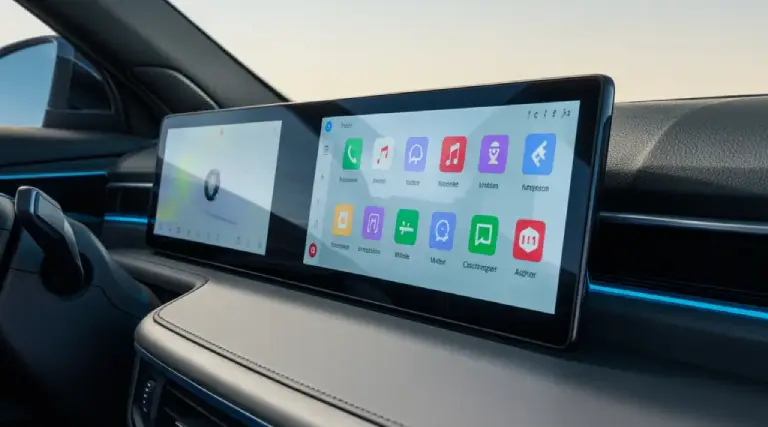
The Proactive Co-Pilot: Redefining Safety
In 2026, safety isn’t reactive; it’s predictive. While seatbelts and airbags remain vital, the primary defense line is now software. The modern suite of android car safety features goes far beyond simple lane-keep assist or backup cameras.
Thanks to powerful onboard AI processors and seamless 5G/6G connectivity, your car is constantly analyzing its surroundings in ways a human driver never could.
- Hyper-Aware V2X Communication: Android systems now facilitate Vehicle-to-Everything (V2X) communication. Your car is in constant dialogue with traffic lights, road infrastructure, and other vehicles. It knows a car three vehicles ahead is slamming on its brakes before you see brake lights. It knows the traffic light around the blind corner is about to turn red, adjusting your speed automatically.
- AI-Driven Driver Monitoring: The interior cabin cameras aren’t just for video calls. They utilize sophisticated AI to monitor driver alertness with incredible accuracy. If the system detects microsleep or distraction, it doesn’t just beep; it can cool the cabin temperature, vibrate the seat, or in emergencies, safely pull the vehicle over.
- Predictive Maintenance: Safety also means reliability. The deep integration of Android systems allows it to monitor engine health, battery life in EVs, and tire pressure in real-time. It predicts failures before they happen, scheduling a service appointment on your calendar automatically before you’re ever stranded on the highway.
The Sanctuary on Wheels: Unmatched Comfort
If safety is the engine of the 2026 driving experience, comfort is the fuel. The modern commute is often the only “me time” people get, and driving comfort technology has risen to meet that need.
The car has become a personalized sanctuary, a third living space between home and the office.
- Biometric Personalization: Forget fumbling with seat memory buttons. As you approach your vehicle, the Android system recognizes you—via phone proximity or facial recognition—and prepares the cabin. The seat position, steering wheel height, ambient lighting color, climate control, and even the suspension stiffness are instantly adjusted to your exact preferences.
The Conversational Assistant: Voice commands in 2026 are fluid and natural. You don’t bark orders; you have a conversation. “Hey Google, I’m stressed, play something relaxing and take the scenic route home,” is all it takes for the system to curate a chill playlist and reroute navigation away from congested highways
The Hub of Entertainment and Connectivity
The car infotainment system benefits in 2026 are staggering, particularly as autonomous driving features become more common in specific zones.
When the car is handling the stop-and-go traffic, the dashboard transforms. Passengers can enjoy 8K streaming video, immersive gaming experiences, or seamless video conferencing for work. The audio experience is equally immersive.
The modern android car stereo advantages go far beyond high wattage. The system uses cabin acoustics mapping to deliver spatial audio that rivals high-end home theaters. Furthermore, because it’s part of the larger Android ecosystem, your audiobook picks up exactly where you left off in your living room, and your podcasts are perfectly synced across all devices.
The Road Ahead
In 2026, we aren’t just driving cars; we are interacting with intelligent spaces.
Android car systems have successfully bridged the gap between our digital lives and our physical journeys. By handling the complex tasks of monitoring safety and curating comfort, technology has given us back the joy of the journey. The road ahead is safer, smoother, and smarter than ever before.
Native vs. Upgrade: How to Get the 2026 Experience
One of the most common questions drivers have is whether they need to buy a brand-new vehicle to experience these android car stereo advantages. In 2026, the market offers two distinct paths, both offering significant benefits.
1. Native Android Automotive (OEM)
For those buying new, “Native Android” is the gold standard. Here, the OS isn’t just an app running on a screen; it is the car.
- Deep Integration: As mentioned, this allows the system to control climate, check tire pressure, and manage battery thermal regulation for EVs.
- Seamless Navigation: The heads-up display (HUD) doesn’t just show arrows; it overlays augmented reality (AR) directions directly onto the windshield, highlighting the exact lane you need to be in.
2. The Aftermarket RenaissanceFor those holding onto their beloved older vehicles, the aftermarket scene in 2026 has exploded. Modern Android car stereos are now sophisticated “brain transplants” for older cars.
Retaining Value: Installing a high-end Android head unit can modernize a 10-year-old car, giving it voice control, 5G connectivity, and modern streaming apps, significantly boosting its resale value.
Customizability: Aftermarket units often offer more freedom for tech enthusiasts to root, tweak, and customize their interface than factory-locked systems.
The Green Connection: Android and the EV Revolution
We cannot talk about driving comfort technology without mentioning the surge in Electric Vehicles (EVs). Android systems in 2026 have become the ultimate range-anxiety killers.
- Smart Routing: Google Maps doesn’t just look for the fastest route; it looks for the most energy-efficient one. It calculates topography, weather, and current traffic to predict exactly how much battery you’ll have upon arrival.
- Charging Sync: The system automatically reserves a charging spot at a station along your route 20 minutes before you arrive, ensuring you never have to wait in line.
Fabric Seat Covers & Resale Value in the UAE
Well-maintained interiors significantly impact resale prices in the UAE’s competitive used-car market. Fabric seat covers:
- Protect original upholstery from wear
- Are easy to clean and maintain
- Appeal to buyers looking for comfort-focused interiors
Fleet vehicles, family SUVs, and daily commuters benefit most from high-quality fabric protection.
Frequently Asked Questions (FAQs)
mostly, no. By 2026, most Android Automotive systems have their own 5G/6G eSIMs. Your phone is helpful for personalization and handoff, but the car is a standalone smart device.
Security is a top priority. Android car safety features now include "sandboxed" architecture. This means the infotainment system (music/apps) is completely isolated from the critical driving systems (brakes/steering), ensuring that a buggy music app can never affect vehicle control.
Absolutely. While the OS is Android-based, the systems in 2026 are universally compatible. They support wireless Apple CarPlay and can sync with iCloud calendars and contacts just as easily as Google services.
Android Auto mirrors your smartphone to your car’s display, relying on your phone for apps and connectivity. Android Automotive OS, on the other hand, is built directly into the vehicle. It runs independently with its own eSIM, deeply integrates with hardware like climate control and battery systems, and powers advanced android car safety features and predictive maintenance without needing a connected phone.
Yes. Thanks to the 2026 aftermarket evolution, you can install advanced Android head units that bring voice assistants, 5G connectivity, streaming apps, and enhanced navigation to older vehicles. While they may not offer the same deep hardware integration as native OEM systems, they still deliver many key car infotainment system benefits and driving comfort technology upgrades at a fraction of the cost of buying a new car.
The Economic Edge: How Android Systems Save You Money
Beyond the thrill of a high-tech dashboard, android car systems are proving to be a savvy financial investment for the modern driver. In 2026, your car isn’t just a depreciating asset; it’s an optimized machine that works to lower your total cost of ownership.
- Insurance Discounts via “Safe Score”: Many insurance providers now offer opt-in programs where your Android system shares anonymized driving data. By utilizing android car safety features—like following distance alerts and speed limit adherence—drivers can see their monthly premiums drop in real-time.
- Fuel and Energy Optimization: Whether you’re driving a hybrid or a full EV, the system’s AI analyzes your driving style. It provides subtle haptic feedback through the pedal to encourage “eco-driving,” potentially extending your range by up to $15\%$ through better regenerative braking and acceleration habits.
- Over-the-Air (OTA) Updates: In the past, a three-year-old car felt “old.” In 2026, car infotainment system benefits include frequent OTA updates. Your car literally gets better, faster, and more feature-rich while it sits in your driveway overnight, delaying the need to trade in for a newer model.
Conclusion: The New Standard of the Road
The evolution of android car systems has reached a tipping point. We’ve moved past the era of “gadgets in cars” and entered the era of “software-defined vehicles.” Whether it’s the peace of mind provided by predictive safety sensors or the sheer joy of a personalized, 8K-connected cabin, the advantages are undeniable.
Choosing a car in 2026 is no longer just about horsepower or fuel economy—it’s about the ecosystem. And right now, Android is leading the charge toward a safer, more comfortable, and more connected horizon.

Jaison Christi
Author | Smart car care tips for performance, safety, reliability.
10 Years. Ideas. Strategy. Measurable Success.
Share :