
Native vs. Aftermarket: Choosing Your Path to Modern Android Car Systems
In 2026, one of the most common questions drivers have is whether they need to buy a brand-new vehicle to experience these android car stereo advantages. Fortunately, the market currently offers two distinct paths, both offering significant benefits.
Whether you are seeking the deepest level of hardware integration or looking to breathe new life into a beloved older vehicle, there is an Android solution built for your needs.
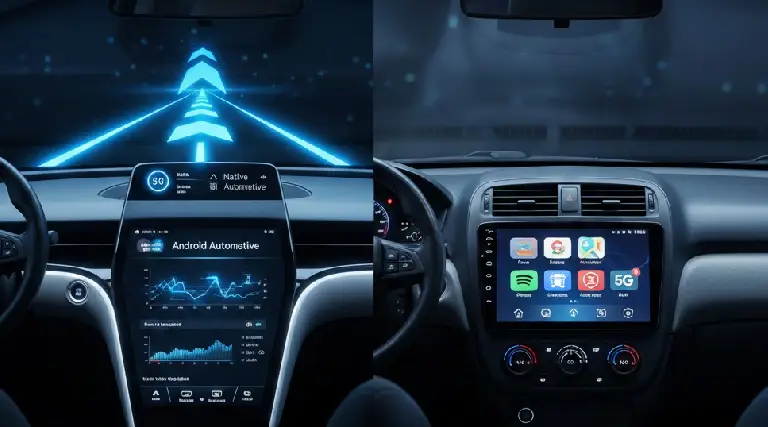
Native Android Automotive (OEM): The Gold Standard
For those buying new, “Native Android” is the gold standard. In these vehicles, the OS isn’t just an app running on a screen; it is the car itself.
- Deep Integration: This fundamental level of integration allows the system to directly control the climate, check tire pressure, and even manage battery thermal regulation for EVs.
- Seamless Navigation: The heads-up display (HUD) doesn’t just show simple turn arrows. Instead, it overlays augmented reality (AR) directions directly onto the windshield, highlighting the exact lane you need to be in
The Aftermarket Renaissance
For those holding onto their beloved older vehicles, the aftermarket scene in 2026 has exploded. Modern Android car stereos are now sophisticated “brain transplants” for older cars.
- Retaining Value: Installing a high-end Android head unit can modernize a 10-year-old car, giving it voice control, 5G connectivity, and modern streaming apps, significantly boosting its resale value.
- Ultimate Customizability: Aftermarket units often offer more freedom for tech enthusiasts to root, tweak, and customize their interface than factory-locked systems.
Frequently Asked Questions (FAQs)
No. In 2026, drivers can choose between Native Android Automotive systems in new vehicles or install advanced aftermarket Android head units in older cars. Both options provide modern connectivity and smart features
Native Android Automotive is a factory-installed system where the operating system is deeply integrated into the vehicle’s hardware. It can control climate settings, monitor tire pressure, manage EV battery thermal regulation, and support advanced features like AR-based heads-up displays
Aftermarket Android head units can modernize older vehicles by adding voice control, 5G connectivity, and streaming apps. They can also increase resale value and offer greater customization options compared to factory-locked systems
Native Android Automotive offers deeper hardware-level integration and seamless advanced features like augmented reality navigation on the windshield. Aftermarket systems focus more on flexibility, customization, and cost-effectiveness
If you want factory-level integration and cutting-edge features like AR HUD navigation, a native system is ideal. If you prefer upgrading your existing vehicle with modern tech at a lower cost, an aftermarket Android system is a practical and effective solution
Making Your Choice
Both native and aftermarket systems bring the incredible power of the Android ecosystem into your daily commute. If you prioritize flawless, factory-level hardware synergy and advanced features like AR HUDs, Native Android Automotive is unparalleled. However, if you want to aggressively modernize your current daily driver with custom tweaks and streaming apps, the aftermarket route is a highly viable and cost-effective choice.
To review the core benefits of upgrading your system regardless of which path you choose, check out our pillar section on Native vs. Upgrade.
Would you like me to draft Cluster Page 5 focusing on “The EV Revolution” to explore how this software is actively eliminating range anxiety?

Jaison Christi
Author | Smart car care tips for performance, safety, reliability.
10 Years. Ideas. Strategy. Measurable Success.
Share :