
Range Anxiety Killers: How Android Integration Powers the EV Revolution
In 2026, the surge in Electric Vehicles (EVs) has fundamentally changed how we think about refueling and trip planning. While early EV adopters struggled with “range anxiety,” modern android car systems have become the ultimate solution to this problem, turning every electric journey into a stress-free experience.
By deeply integrating with the vehicle’s powertrain and environmental sensors, Android is leading the charge toward a more efficient and connected horizon.
Smart Energy-Efficient Routing
One of the most powerful android car safety features is the ability to predict the future of your battery life with pinpoint accuracy. Google Maps in 2026 does more than just find the fastest path; it finds the most energy-efficient one.
- Topographical Analysis: The system calculates the elevation of your route, knowing exactly how much energy will be consumed on steep climbs and how much can be recovered during descents.
- Weather Integration: By accounting for current wind resistance and outside temperatures—which heavily impact battery performance—the system provides a reliable prediction of your battery level upon arrival.
- Real-Time Adjustments: If traffic patterns change, the system automatically adjusts its calculations to ensure you always have enough power to reach your destination.
Automated Charging Sync: No More Lines
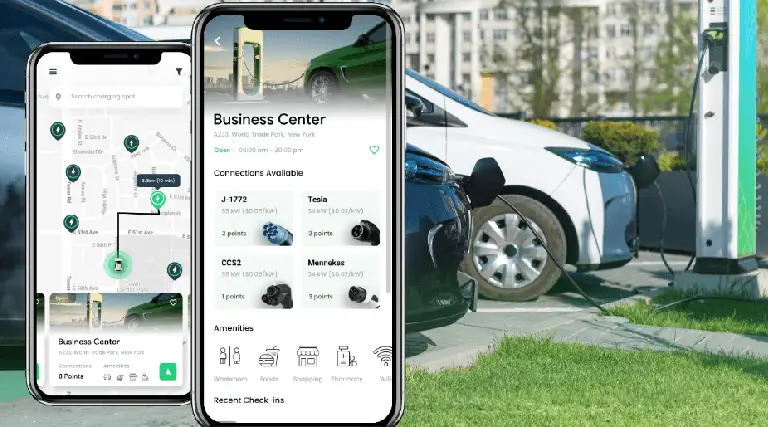
The days of arriving at a charging station only to find a long queue are over. In 2026, your car handles the logistics of “refueling” before you even realize it’s necessary.
- Proactive Reservations: The system identifies the best charging station along your route and automatically reserves a spot 20 minutes before you arrive.
- Seamless Payments: Because the car is a standalone smart device with its own connectivity, the charging process is often “plug-and-play,” with payment handled automatically via your integrated profile.
- Time Optimization: By eliminating the wait, the system ensures that charging is a minor pause in your journey rather than a major disruption.
Eco-Driving Haptics: Training for Efficiency
To maximize the car infotainment system benefits regarding efficiency, Android systems now use subtle haptic feedback to help you become a better driver.
- Pedal Feedback: The system provides gentle resistance or vibrations through the accelerator pedal to encourage “eco-driving” habits, such as smoother acceleration.
- Optimized Regeneration: By teaching you the ideal rhythm for regenerative braking, these haptic cues can potentially extend your driving range by up to 15%.
- Real-Time Coaching: This driving comfort technology doesn’t just monitor you; it actively helps you save money and energy in real-time.
Frequently Asked Questions (FAQs)
Modern Android car systems reduce range anxiety by using smart energy-efficient routing, real-time battery predictions, and environmental data analysis. They calculate elevation, weather impact, and traffic changes to ensure drivers always reach their destination with sufficient charge
Smart routing analyzes topography, wind resistance, outside temperature, and traffic conditions to determine the most energy-efficient path—not just the fastest one. It continuously updates battery level predictions to provide accurate arrival estimates
In 2026, Android-integrated EV systems can proactively identify charging stations along your route and automatically reserve a slot before arrival. Payment is handled seamlessly through the vehicle’s connected profile, making charging plug-and-play
Eco-driving haptics provide subtle pedal feedback—such as resistance or vibration—to encourage smoother acceleration and optimized regenerative braking. These real-time cues can potentially increase driving range by up to 15%
The software-defined vehicle relies heavily on intelligent energy management. Android integration connects powertrain data, environmental sensors, navigation, and charging logistics into one system, transforming EV ownership into a more efficient and stress-free experience
The New Standard of Electric Mobility
The evolution of the “software-defined vehicle” means that an EV is only as good as the code that manages its energy. With Android at the helm, drivers can stop worrying about the nearest plug and start enjoying the joy of the journey.
To explore more about how these systems integrate with the overall vehicle ecosystem, return to our main guide on The Green Connection.

Jaison Christi
Author | Smart car care tips for performance, safety, reliability.
10 Years. Ideas. Strategy. Measurable Success.
Share :